
Estimated reading time: 14 min 58 sec.
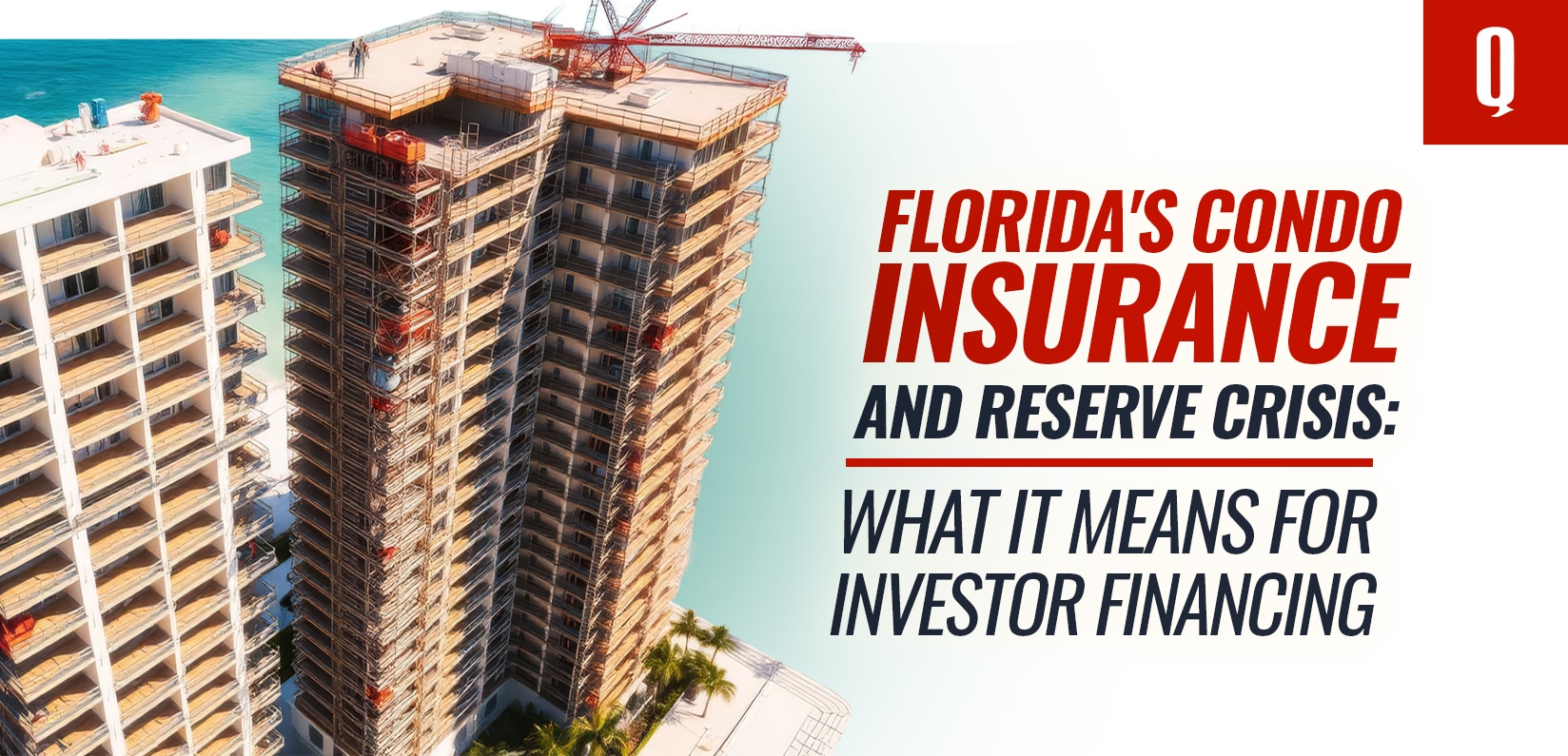
Florida’s condominium market is going through the most significant regulatory shift in decades, and it’s reshaping how investors buy, hold, and finance condo properties across the state. Rising insurance costs, mandatory structural reserve funding, and tighter lending guidelines have converged into what many in the industry are now calling a full-blown affordability and financing crisis for condos.
For realtors and investors who built their strategy around condo units as accessible, cash-flowing rental properties, this shift changes the math. Understanding what’s actually happening, and how it affects condo financing Florida, is now essential to advising clients accurately in 2026.
Table of Contents
How Florida Got Here
The current wave of regulation traces back directly to the Surfside condominium collapse in 2021, which exposed how many older buildings across Florida had gone years, sometimes decades, without adequately funding reserves for major structural repairs. In response, the state passed sweeping legislation requiring condo associations to properly fund and maintain their buildings going forward.
That legislation is no longer theoretical. It’s now fully in effect, and its financial impact is showing up directly in HOA budgets, special assessments, and mortgage approvals across the state.
What makes this moment different from prior rounds of condo regulation is the convergence of three pressures at once: mandatory reserve funding, a hardened insurance market, and stricter agency lending guidelines. Any one of these alone would be manageable for most associations and buyers. Together, they’re forcing a market-wide repricing of condo ownership costs that realtors and investors need to understand before they can price a deal accurately.
What Are SIRS and Milestone Inspections?
Two requirements sit at the center of this shift: Structural Integrity Reserve Studies (SIRS) and Milestone Inspections.
A SIRS is a mandatory reserve study for condo and co-op buildings of three or more habitable stories, including four-unit buildings under the more recent HB 913 update. Licensed engineers or architects evaluate major structural components, roofs, load-bearing walls, foundations, waterproofing, and other critical systems, and determine how much the association must reserve to fund future repairs without relying on deferred maintenance or emergency borrowing.
The initial SIRS deadline for existing associations was extended to December 31, 2025, and studies must now be updated at least every ten years, or sooner if significant building changes occur. Costs for a mid-size condo association typically run between $5,500 and $16,500, and have climbed 20% to 30% in markets affected by recent storm damage.
Milestone inspections work alongside SIRS, requiring older buildings to undergo structural evaluations at defined age thresholds, with the findings feeding directly into how much an association needs to reserve and repair.
Why Reserve Funding Is Driving Special Assessments
Before this legislation, many Florida condo associations kept reserve contributions artificially low to minimize monthly HOA dues, a practice that helped units look more affordable on paper but left buildings financially unprepared for major repairs.
SIRS effectively ends that practice. Associations are now required to fund reserves at the level their engineering study recommends, and boards that had been underfunding reserves for years are suddenly facing a funding gap that has to close quickly.
HB 913 does provide some flexibility, allowing associations to fund the gap through special assessments, association loans, or lines of credit, and permitting a temporary funding pause of up to two years for buildings with recent storm damage. But for many associations, the result is still the same: unit owners are being hit with special assessments, often running into the tens of thousands of dollars per unit, to bring reserves into compliance.
For investors, this changes the ownership cost equation on a condo investment overnight, sometimes mid-hold, and it’s one of the biggest reasons condo deals that penciled out two years ago no longer do today.
How Rising Insurance Costs Compound the Problem
Reserve funding isn’t happening in isolation. Florida’s property insurance market has faced years of rate increases and reduced carrier availability, driven by hurricane exposure, litigation costs, and rebuilding expenses. Condo associations, which must carry master policies covering the building’s structure and common areas, have felt this pressure directly.
When an association’s insurance premium jumps, that cost flows straight into monthly assessments. Combined with new reserve funding obligations, many owners and investors are seeing total monthly carrying costs rise significantly faster than rental income in the same period, compressing returns on properties that once cash-flowed comfortably.
Older buildings near the coast, and those with significant deferred maintenance, tend to see the sharpest premium increases, since carriers price risk based on the building’s age, construction, and claims history as much as its location. Investors evaluating a condo purchase now need to treat insurance cost trajectory as a core underwriting factor, not an afterthought calculated after the offer is already accepted.
Tighter Lending Guidelines Are Reshaping Condo Financing
The regulatory shift has also reached the lending side directly. Fannie Mae’s updated condo guidelines, phased in through 2026 and into early 2027, raise the minimum reserve allocation requirement from 10% to 15% of a building’s annual budgeted assessment income, unless a current reserve study supports a different figure. For an association collecting $1 million a year, that’s an additional $50,000 required in reserves.
At the same time, Fannie Mae eliminated the Limited Review pathway for established condo projects as of August 2026, meaning nearly every project now requires either a Full Review, with significantly more documentation, or a project-level waiver. Full Review now requires lenders to collect and evaluate current budgets, financial statements, reserve studies, delinquency reports, meeting minutes, and insurance certificates, and any unresolved structural or mechanical issues identified in a recent inspection can make the entire project ineligible for conventional financing.
In practical terms, this means a buyer’s personal financial strength no longer guarantees approval. The building’s financial health has become just as important, and in many cases more important, than the borrower’s file.
What This Means for "Non-Warrantable" Condos
Buildings that don’t meet Fannie Mae or Freddie Mac’s project-level requirements, whether due to reserve shortfalls, high investor concentration, unresolved litigation, or pending special assessments, become what the industry calls “non-warrantable.” These properties simply don’t qualify for standard conventional financing, regardless of how strong the individual buyer’s application is.
This is a growing category across Florida, and it’s catching both buyers and realtors off guard when a deal that looked straightforward at the offer stage suddenly stalls at underwriting because the building itself doesn’t meet current guidelines.
Why This Creates an Opening for Alternative Financing
This is exactly where DSCR loans Florida investors have relied on for other property types are becoming increasingly relevant for condo purchases as well. Because DSCR and other non-QM financing programs evaluate the deal differently than conventional agency loans, some lenders are able to offer more flexibility on non-warrantable condo projects that conventional guidelines have effectively locked out.
This doesn’t mean every non-warrantable condo is financeable, underwriting still needs to account for the building’s financial condition and the investor’s own numbers. But it does mean investors and realtors have more options than simply walking away from a deal the moment a building fails Fannie Mae’s Full Review.
What Investors Should Evaluate Before Buying a Condo Today
A more rigorous due diligence process has become essential for condo purchases in this environment. Investors should now routinely request and review the association’s most recent SIRS report, current reserve funding levels relative to what the study recommends, any pending or recently completed special assessments, the master insurance policy and its renewal history, and whether the building has passed its required milestone inspection.
Skipping this step, something that was far more common when reserve requirements were looser, now carries real financial risk. A building with an underfunded reserve today is a building likely to levy a large special assessment tomorrow.
Why Working With an Experienced Lender Matters More Than Ever
Navigating condo financing in Florida’s current environment requires a lender who understands both the shifting agency guidelines and the alternative financing programs available when a building doesn’t fit the conventional box. An experienced financing partner can quickly identify whether a specific building is likely to qualify for standard financing, and if not, what non-QM or DSCR-based alternatives might still make the deal work.
This kind of early guidance, before an offer is written rather than after underwriting stalls, is what separates a smooth condo transaction from one that falls apart weeks before closing.
How This Shift Is Changing Investor Strategy
Some investors are responding by shifting allocation away from smaller, older condo buildings and toward newer construction, townhomes, or single-family rentals that aren’t subject to the same association-level reserve and insurance dynamics. Others are staying in the condo space but narrowing their search to buildings with a demonstrated track record of full reserve funding and stable insurance history, treating that financial discipline as a proxy for lower long-term risk.
Neither approach is universally right. The better move for most investors is building a financing relationship that can move across property types, so the decision comes down to which deal actually performs, not which one happens to be easiest to finance conventionally.
Frequently Asked Questions
Does every Florida condo building require a SIRS?
Buildings of three or more habitable stories, along with four-unit buildings under HB 913, are generally required to complete a SIRS. Smaller buildings are typically exempt, though requirements can vary, so it’s worth confirming a specific building’s status directly.
Can a special assessment happen after I've already closed on a unit?
Yes. Reserve funding gaps and insurance cost increases can trigger new assessments at any point, which is why reviewing an association’s financial health before purchase, not just at the point of a required disclosure, is so important.
What makes a condo building "non-warrantable"?
Common reasons include insufficient reserve funding, high investor concentration relative to owner-occupants, unresolved litigation, pending special assessments, or incomplete structural documentation required under Fannie Mae’s Full Review process.
Are non-warrantable condos impossible to finance?
No. They generally don’t qualify for conventional agency financing, but some non-QM and DSCR-based programs can still work depending on the specific building and deal, which is why speaking with an experienced lender before writing an offer matters.
Should investors avoid condos altogether right now?
Not necessarily. Well-managed buildings with properly funded reserves and clean inspection histories can still be strong investments. The key difference now is that due diligence on the building itself has become just as important as evaluating the unit or the deal terms.
Talk to QKapital Before Your Next Condo Purchase
Florida’s condo market has changed, and financing needs to keep pace. QKapital works with real estate investors and realtors to evaluate condo financing options, including alternative programs for buildings that don’t fit conventional guidelines, so deals don’t fall apart at underwriting.
Contact QKapital to review your financing options before your next condo offer, and make sure the building and the loan structure actually line up.